Product Philosophy
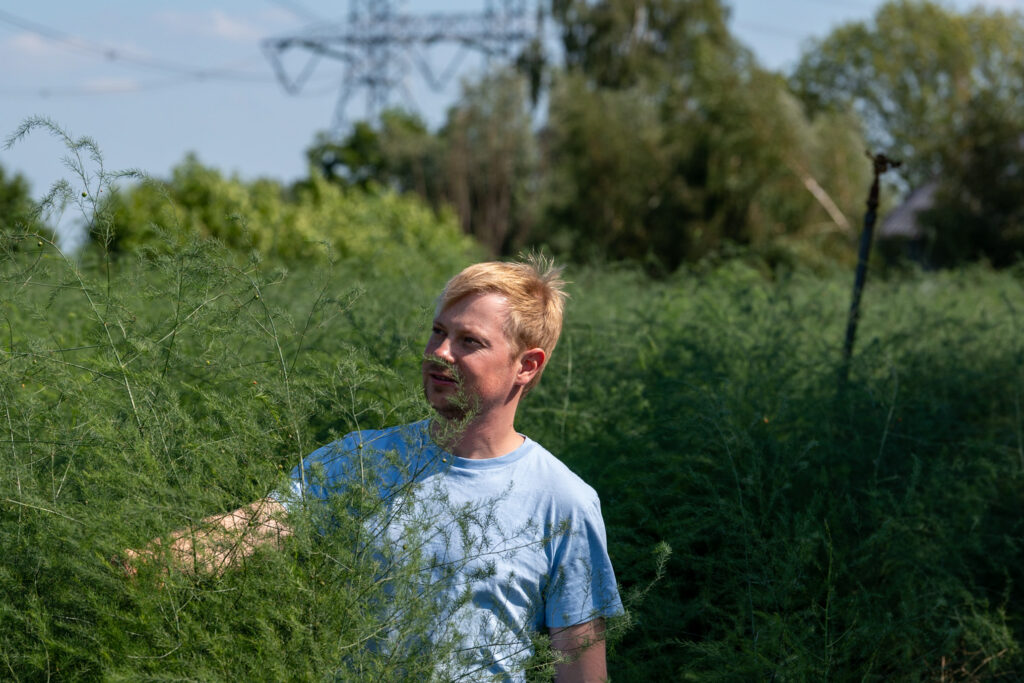
What I picked up from a regular field in Europe where food is cultivated.
Plastic, concrete, trash. This is the human trace in our earth layer. And I think we can do better.
To understand why, you need to go back to the origin of farming. Originally the earth was covered in forests and swamps. In a forest, leaves fall, trees break down, and countless species feed on each other’s remains. The soil becomes fluffy, rich in composted organic matter and full of life. When that forest is cleared for agriculture, the soil is at its most fertile — because the forest made it that way.
Over the last 300 years, as our population has grown enormously, we have become incredibly efficient at producing food. And I am genuinely grateful for that. This is not about blaming farmers — thank you to everyone who produces our bread, cheese, tomatoes and lettuce. But it is 2026 and it is time to make up the balance.
The cost of that efficiency is soil life. When fertilizers can provide everything a plant needs, plants no longer depend on the soil and the life within it. That interdependence — what some researchers call Vegetal Politics, the communication and cooperation between plants and soil organisms — quietly disappears. And with it, the soil itself begins to die. Desertification is moving northward through Spain and France. The most fertile regions in Europe are losing their capacity to grow food.
In 2018 years ago I watched a documentary where researchers dumped truckloads of orange peels onto degraded land. The project was cancelled before any results could be measured. Eight years later, when they returned, the peels had fully composted and trees and bushes were growing on what had been dead soil. That moment changed the way I think about everything.
What soil life needs is something to eat. Tonnes and tonnes of organic fibre, the way a forest naturally provides. We have these fibres in abundance — straw, roadside grass, flax, paprika plants, tomato plants, miscanthus. But to get fibres onto agricultural fields at scale, they need to first become something useful to people. They need to pass through human hands before they return to the earth.
So I started making something. I experimented with over a thousand recipes, different fibres, different glues, different production processes. I was not looking to reduce CO2 emissions or improve indoor air quality. I was not starting with a product in mind. I was trying to shift human existence from something toxic and extractive to something that actively feeds the earth.
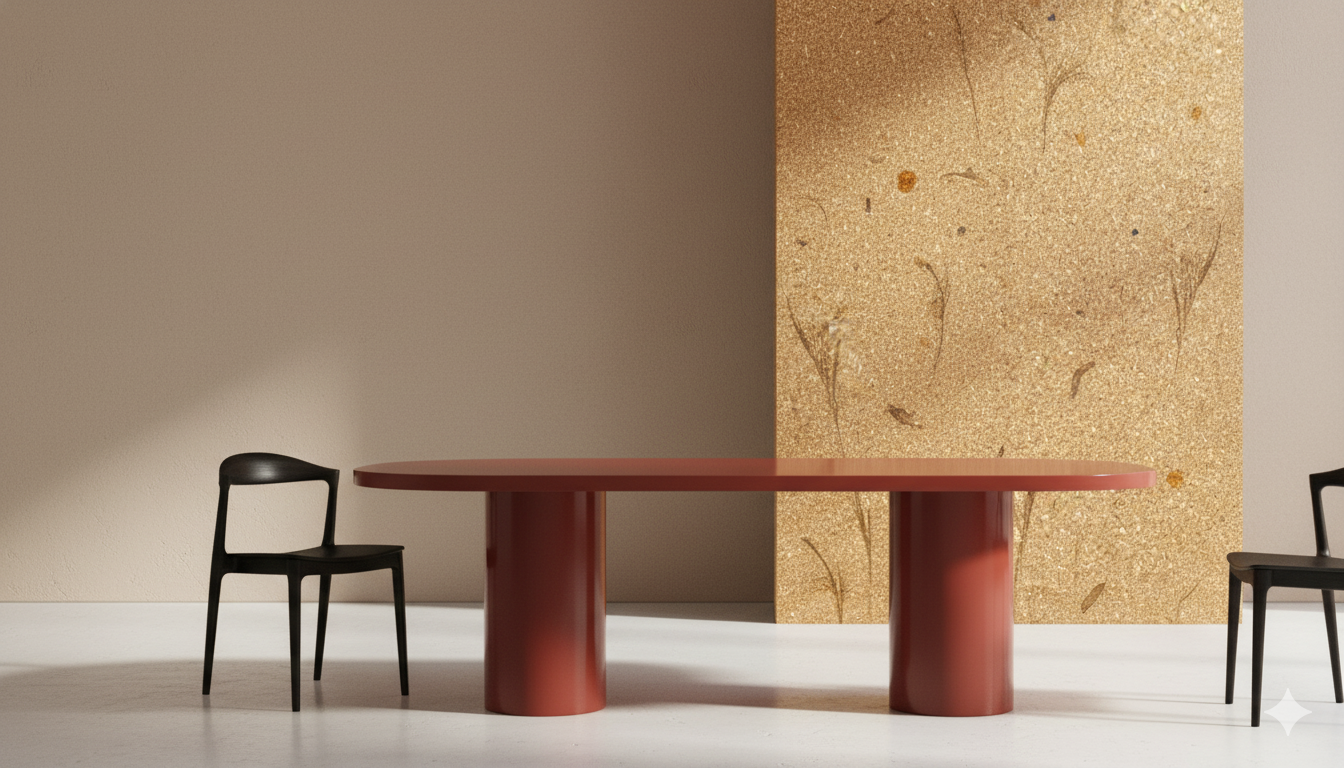
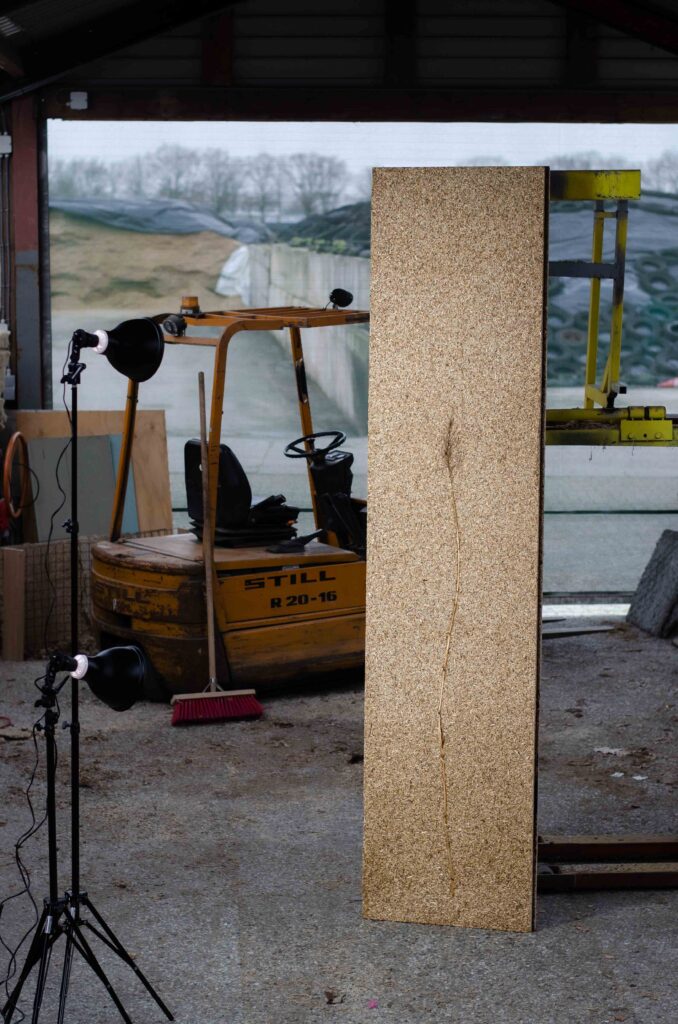
What I arrived at was a board material. Pressed together from local by-stream fibres using a sugar-based glue — a glue that feeds soil life rather than poisoning it. A material that can be mass produced, mass consumed, and then composted back into the earth, leaving the soil richer than before.
That is what Compostboard / Partikal is. Panels by Plants. Not a product that happens to be sustainable, but a material designed to make human life part of the eco-system again.