Indoor Air Quality in Office Environments
The Business side of Indoor Air Quality
The air in our offices is either our friend or our enemy. As we spend a large chunk of our time breathing in and out healthy or toxic air. It’s a factor that influences health, wellbeing and performance on a daily basis. Research by TNO shows that polluted indoor air is responsible for 2.3% of the total disease burden in the Netherlands, with societal costs of around €7.8 billion per year. The good news: we know exactly where the biggest gains can be made. Particulate matter plays the leading role, followed by nitrogen dioxide and formaldehyde. With targeted measures, the effects are both measurable and manageable.
From complaint to opportunity
Where we used to talk about “comfort complaints” – dry air, headaches or fatigue – we now know that these are often signals of an unhealthy indoor climate. Many substances are invisible and odorless, but their impact is clear: higher concentrations indoors than outdoors, with consequences for energy and focus. At the same time, this presents real opportunities: organizations that tackle air quality smartly see direct improvements in productivity and engagement.
The key players in the air
- Volatile Organic Compounds (VOCs): originating from furniture, paint, cleaning products and printers. Formaldehyde is the best-known culprit here, but it can be effectively reduced through smart material choices.
- Particulate matter: partly from outdoors, partly from equipment and daily activities, such as cooking on gas. Modern ventilation systems with filters mean offices can be cleaner than homes.
- Chemical gases: CO₂ is the best-known indicator of fresh air. Levels that are too high lead to a loss of concentration, but at the same time provide a clear signal that ventilation can be improved.
Improving health and performance
Healthy air quality translates directly into more energy, sharper concentration and less absenteeism due to illness. The notorious Sick Building Syndrome – complaints that arise during office hours and disappear upon leaving – can be prevented. In the longer term, a good indoor environment policy reduces the risk of chronic conditions and delivers demonstrable health benefits.
The role of employers and building owners
Dutch occupational health legislation (the Arbowet) already points the way: through the mandatory risk assessment (RI&E), risks – including those related to the indoor climate – must be addressed. Certifications such as Blauer Engel, EMICODE and M1 help in selecting low-emission materials. Belgium shows that it can be taken even further, with CO₂ reference values and labels for buildings. Such steps make air quality tangible and comparable.
Conclusion
A healthy indoor climate is not a luxury, but a strategic advantage. Investing in clean air – through source control, ventilation and monitoring – reduces costs, increases productivity and strengthens wellbeing. In short: better air means better work.
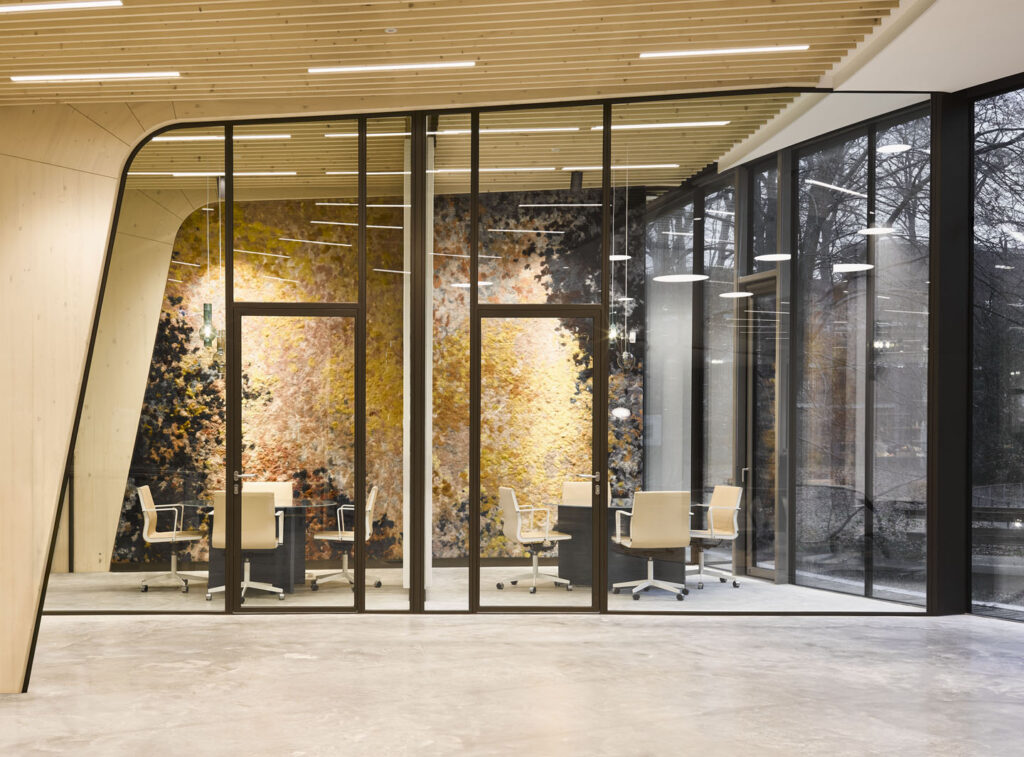
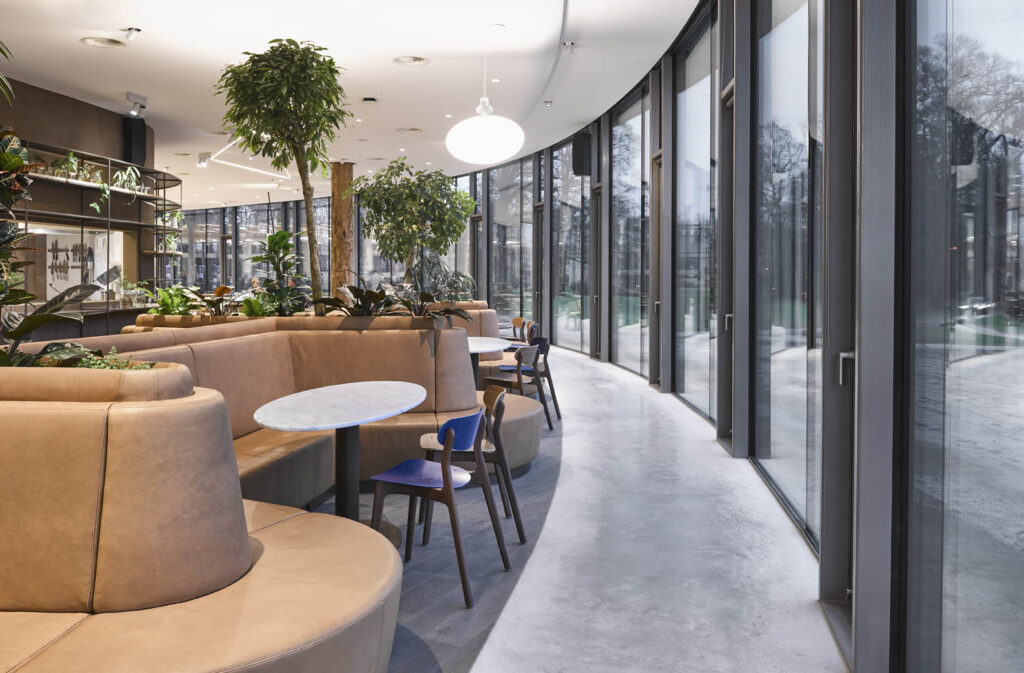
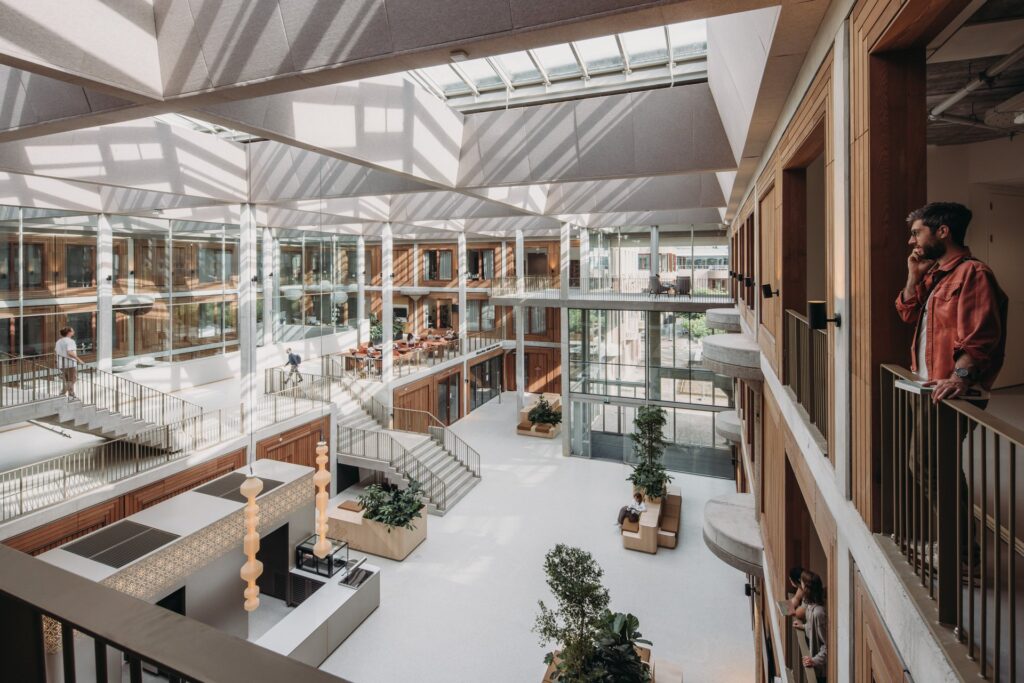
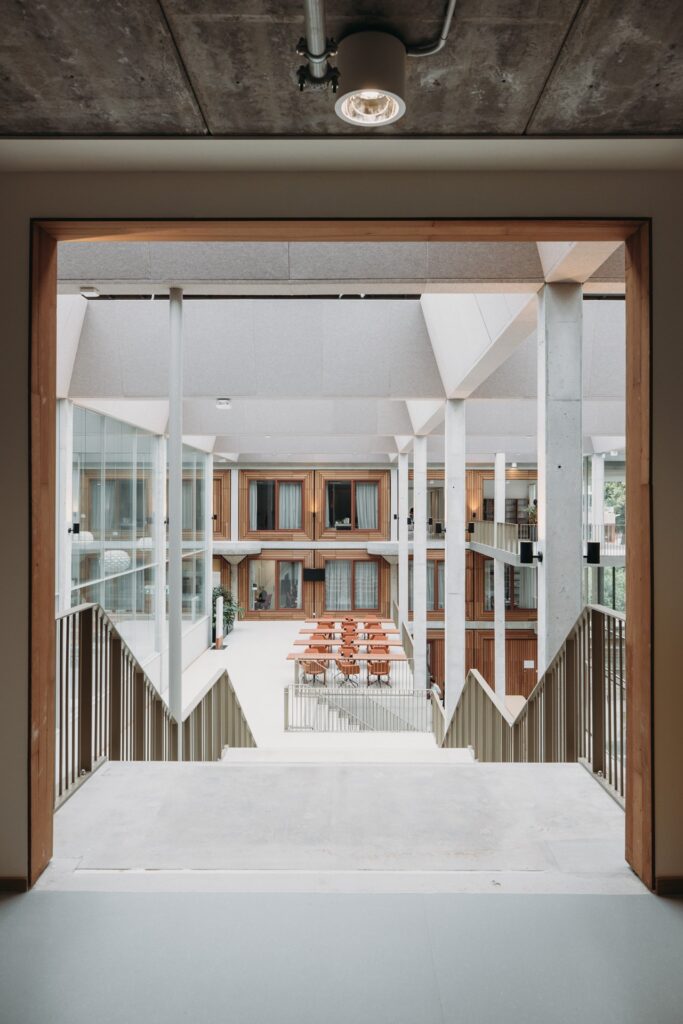
Photos are by Fokkema and Partners at Leiden University Herta Mohr, Zenber Architecten at Gemeente Rheden, photos by Sclagriabree and Ex-Interiors at Triodos Bank, photos by: Alexander van Berge and Bert Rietberg
