The Architect as Climate Catalyst
Ambitious Future
The Netherlands is taking an ambitious stance in a climate crisis that affects, among other things, the real estate sector. The built environment is responsible for 40% of our energy consumption and CO2 emissions. This means that every building we design, construct or renovate has a direct impact on the Paris climate goals. For architects, this presents a unique opportunity: the role is shifting from aesthetic designer to strategic climate leader. Those who respond smartly to this protect not only the planet, but also the value of buildings, the reputation of clients, and the future-proofing of project ownership.
Why action matters
Buildings that fail to meet future sustainability standards risk losing their value – so-called “stranded assets”. Stricter legislation and market demands mean that sustainable construction is increasingly less of a choice and more of a necessity. At the same time, sustainability offers financial added value: well-designed, energy-efficient buildings attract tenants and command a “green premium”. For architects, this means that design decisions contribute directly to a project’s market value and success.
Real Estate Scale of Stranded Assets
The Dutch Central Bank (DNB) has highlighted in a report that poorly insulated and non-sustainable buildings pose significant financial risks for banks, insurers and pension funds. These institutions hold nearly €1,400 billion in real estate in their combined portfolios, and DNB estimates that between 30% and 75% of this is at risk of depreciation.
How the architect can make the difference
The architect is at the foundation of building projects and can put forward sustainable proposals from the very first sketch. By using circular and bio-based materials, designing for disassembly, and optimizing the energy performance of buildings, CO2 emissions can be drastically reduced. A true “Paris Proof” approach results in buildings that produce energy, can be flexibly repurposed, and offer a healthy work environment.
Data and transparency are key
Modern tools such as Life Cycle Assessment (LCA) make it possible to gain insight into every project’s CO2 emissions. This supports sustainability reporting to Europe, such as CSRD reporting, and also gives architects a solid foundation for sustainability claims, preventing legal and reputational risks such as greenwashing.
Inspiring examples show it can be done
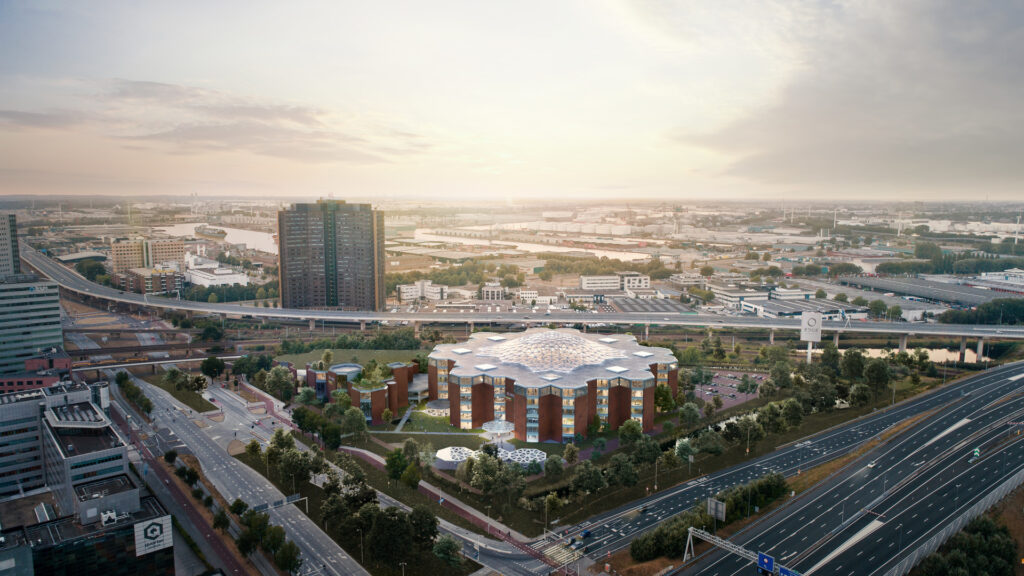
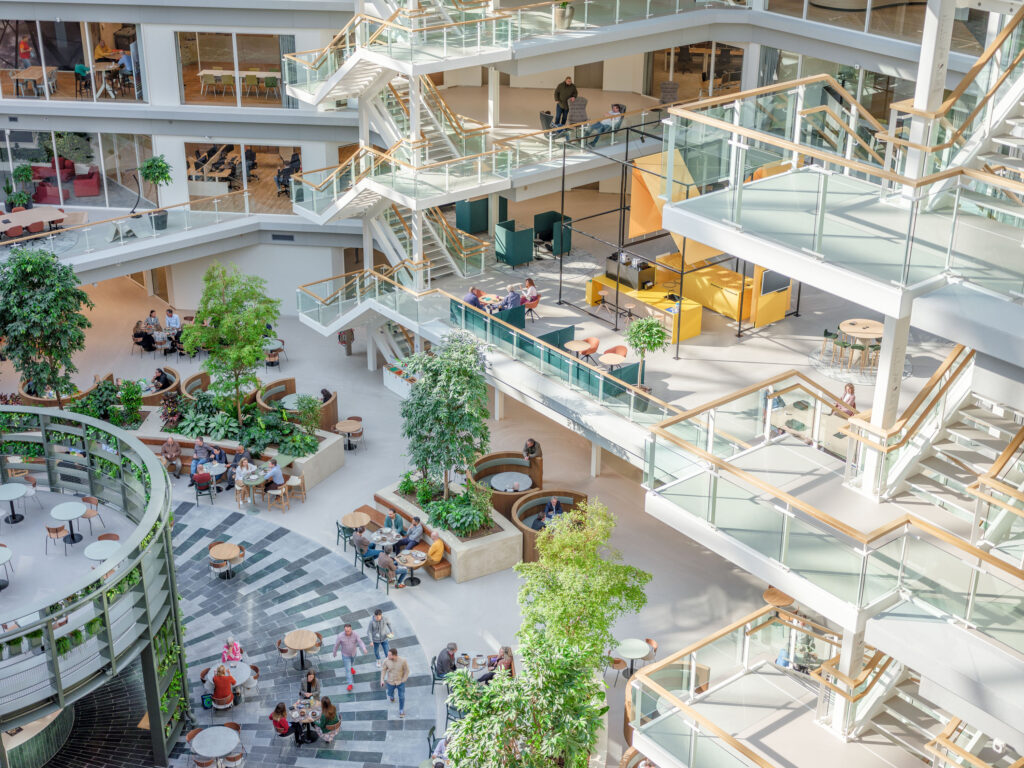
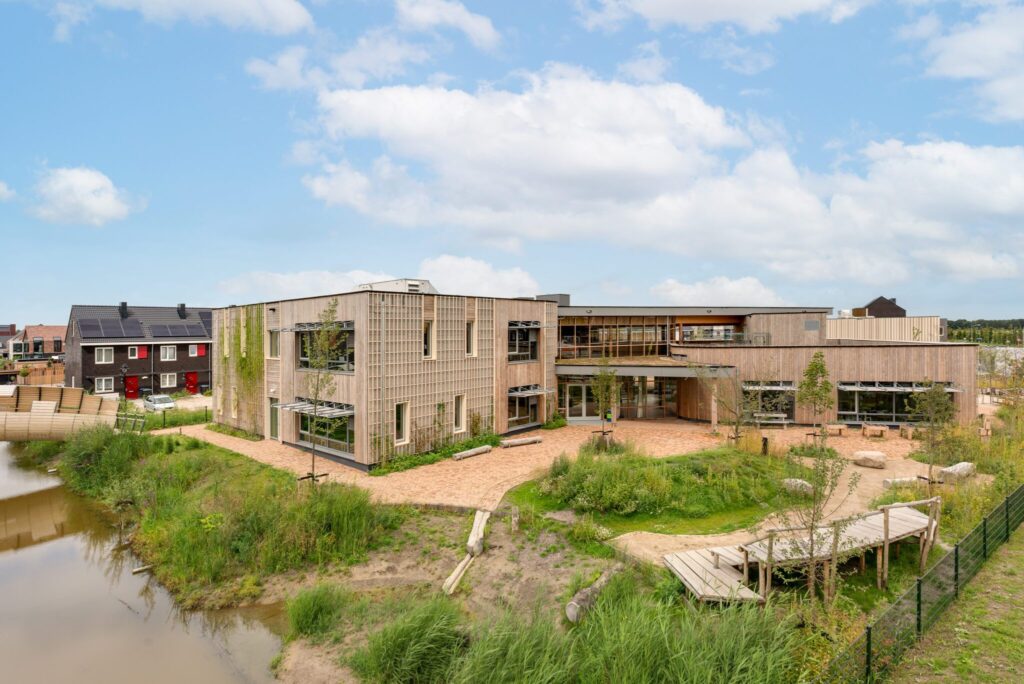
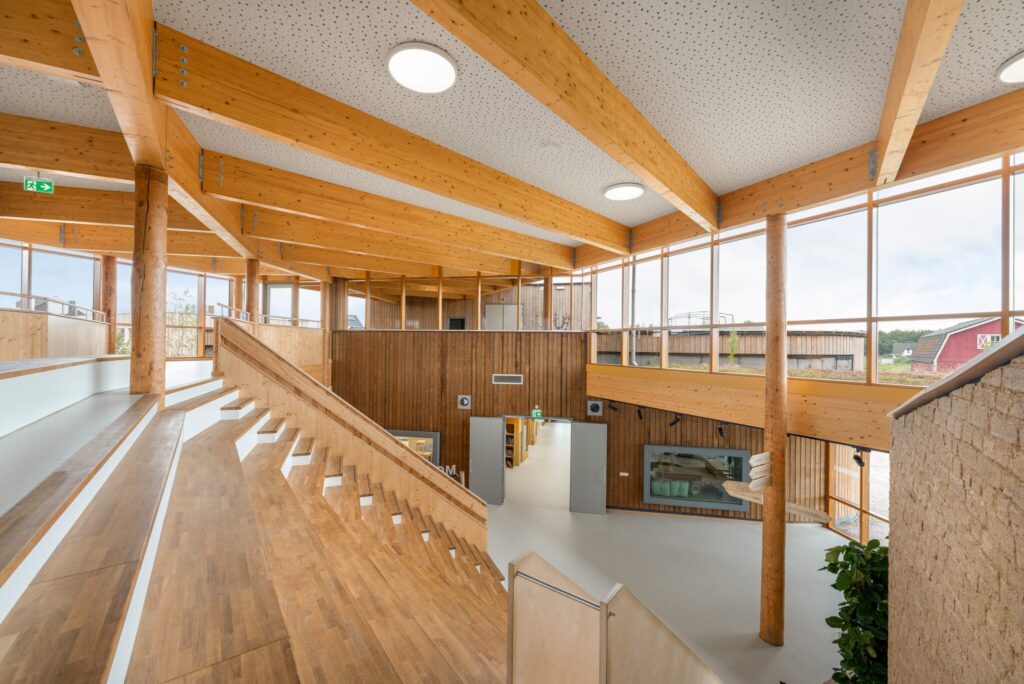
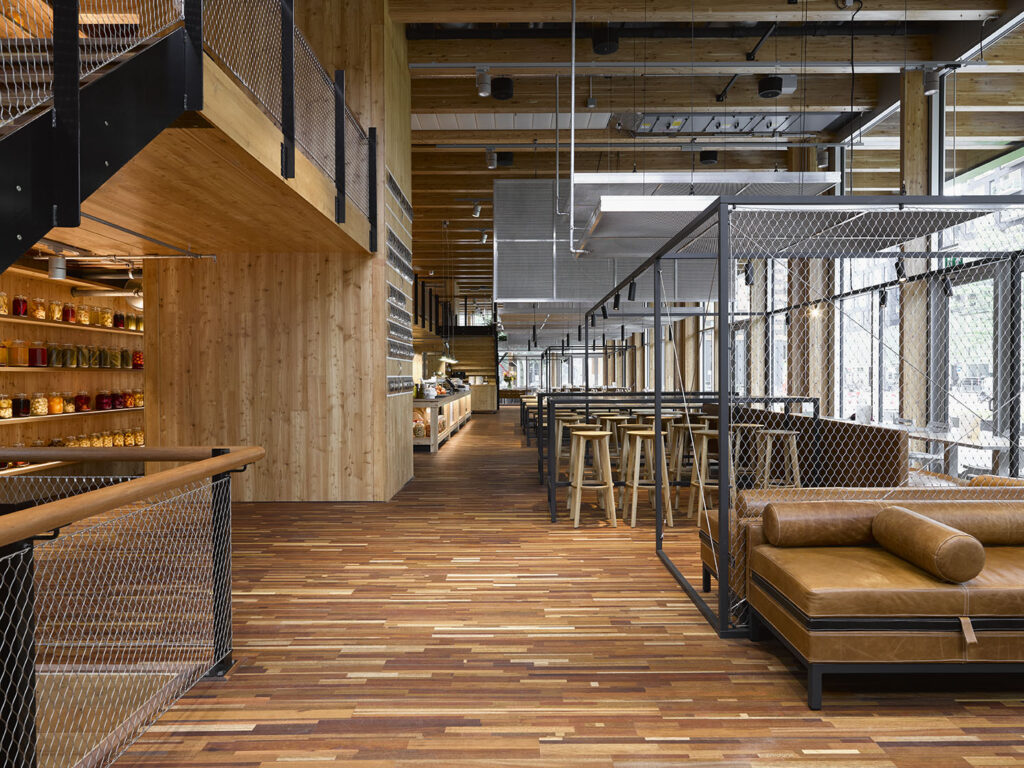
Projects such as Circl in Amsterdam, EDGE Amsterdam West, and the biophilic school De Verwondering demonstrate that sustainable construction is a feasible and profitable practice. These cases prove that circular and bio-based building can go hand in hand with aesthetics, functionality and financial added value.
Photos courtesy of Alexander van Berge, ORGA Architects and Architekten Cie, Ernst Raaphorst, Ex Interiors
